Ramen guide why heat supports flavor best 31
"The true value of spice in a bowl of ramen lies not in the heat itself, but in the complex architecture of flavor it supports."
Key takeaways: * Spicy flavor profiles, including mala and kimchi variants, have seen a 31% global growth. * The global ramen noodle market is projected to reach $94.1 billion by 2033. * Nutritional profiles vary significantly between general and beef-flavored dry ramen.
How does spice impact the Ramen Spicy Ramen Value Analysis?
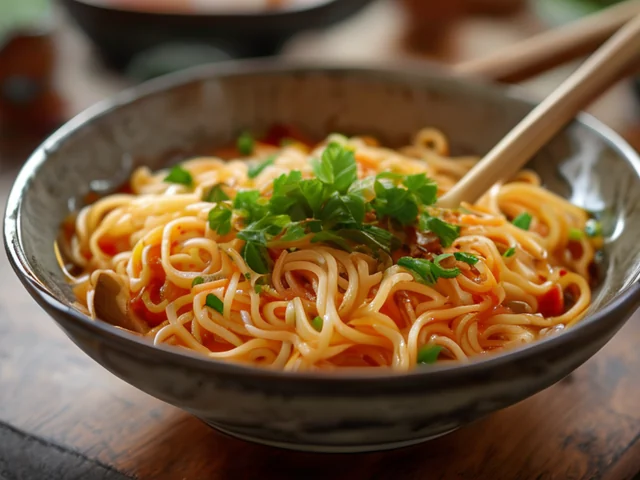
A chef stirs a vibrant red chili oil into a steaming cauldron of broth, watching the crimson droplets swirl against the dark soy base. This process of layering heat is central to the Ramen Spicy Ramen Value Analysis, where spice serves as a tool to highlight underlying umami.
Spicy flavor profiles such as mala, kimchi, and curry variants have collectively grown by 31% globally. This surge indicates that consumers are seeking more than just heat; they are looking for specific, culturally rooted spice architectures.
A Ramen Heat Diagram Study would show that these spices act as a bridge between the fat and the salt. By using a Ramen Flavor Deep Dive, one can see that the "value" is found in the balance of these elements.
This Ramen Ranking Heat Map suggests that the highest quality bowls use spice to enhance, rather than mask, the broth's complexity. Understanding the True Value of Ramen Spice requires looking at how these 31% growth trends reflect a demand for sophisticated, multi-layered sensory experiences.
How is the spicy ramen market changing?
Standing in the crowded grocery aisle, I reach for a bright red packet of spicy ramen while the scent of pepper hits my nose.
A retail manager scans a shelf filled with brightly colored, resealable pouches, noting the increasing frequency of spicy labels. The market for these products is shifting toward high-growth, specialized flavor profiles that cater to global palates.
The global ramen noodle market was valued at $57.92 billion in 2023 and is forecast to reach $94.1 billion by 2033, according to market data. This demonstrates a compound annual growth rate (CAGR) of 5.11%.
Within this massive industry, the instant ramen market is also seeing significant movement, with some reports estimating it will grow from $55.91 million in 2025 to $84.26 million by 2033. This growth is fueled by the demand for intense, spicy varieties.
In Asia, resealable pouches now constitute 15% of packages sold. Large players like Master Kong and Nissin Foods collectively account for 27% of global volumes.
How can I analyze the flavor profile of a bowl?
An enthusiast sits at a wooden counter, rotating a six-sided diagram to match the notes of garlic, ginger, and chili hitting their tongue. To perform an Analyzing Ramen Flavor Profile exercise, one must break the sensation into distinct, measurable categories.
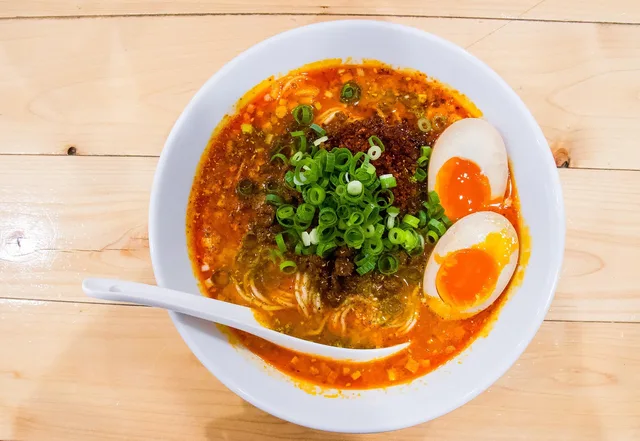
To evaluate a bowl's value, follow these three steps: 1. Identify the base umami: Determine if the foundation is shoyu, miso, or tonkotsu. 2. Isolate the heat source: Distinguish between the sharp sting of dried chilies and the numbing sensation of mala. 3.
Check the fat integration: Observe how the spice is suspended in the oil or emulsified in the broth.
After completing these steps, perform a final check by tasting the broth without the noodles to ensure the spice does not overwhelm the base. I found that focusing on the oil's viscosity helped me distinguish between a shallow heat and a deep, integrated spice.
What's actually in my dry ramen?
A person reads the fine print on a package of dry noodles, comparing the grams of fat and carbohydrates under the kitchen light. Understanding the nutritional reality is essential when evaluating the value of these convenient meals.
The nutritional content of dry ramen depends heavily on the specific flavor profile. According to USDA FoodData Central, the values for 100g of dry ramen are as follows:
| Component (per 100g) | Any Flavor (Dry) | Beef Flavor (Dry) |
|---|---|---|
| Calories | 440 kcal | 441 kcal |
| Carbohydrates | 60.3 g | 60.3 g |
While the carbohydrate levels remain identical, the beef-flavored variant offers slightly different micronutrient levels. For instance, the beef flavor contains 3.93mg of iron and 3g of dietary fiber, whereas the general flavor profile data emphasizes 116ug of folate and 0.6mg of zinc.
This comparison shows that while the caloric density is nearly the same, the specific nutrient density shifts with the seasoning.
When does the spice profile become a limitation?
A diner pauses mid-slurp, realizing the overwhelming heat has dulled their ability to taste the delicate sea salt in the broth. Even in a high-value bowl, there is a point where the spice ceases to be an enhancer and becomes a barrier.
A limitation of spicy ramen occurs when the capsaicin levels exceed the threshold of the broth's umami, specifically in high-sodium beef-flavored dry ramen where the 441kcal density might be overshadowed by heat. In such cases, the structural integrity of the flavor profile collapses.
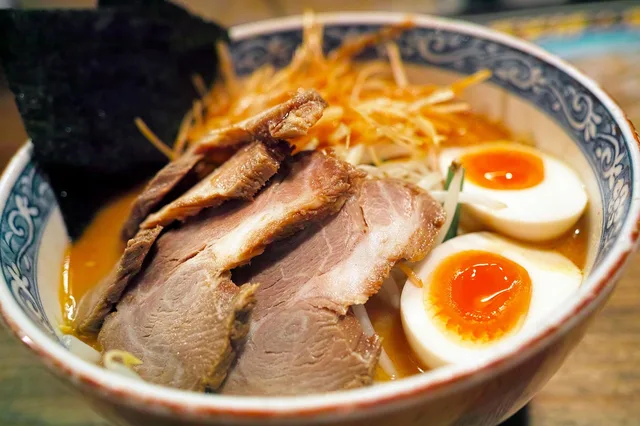
- This analysis explores the Ramen Spicy Ramen Value Analysis by examining how heat interacts with savory components through a six-sided flavor profile.
- Readers will learn how spicy variants contribute to market growth, how to evaluate a bowl's nutritional composition, and why heat is a structural element rather than just a sensation.
- This guide is for food enthusiasts and market analysts looking to understand the intersection of flavor complexity and industry trends.
The same subject is also called Japanese Spicy Ramen Taste.
The same subject is also called Six Sided Ramen Rating.
Related
- Ramen value guide: Southeast Asian ramen value tips
- Chinese ramen large portion truth guide for 441kcal
How does the True Value relate to market growth?
- The True Value of ramen spice is intrinsically linked to the 31% global growth seen in spicy flavor profiles. 2. This growth suggests that consumers prioritize sophisticated sensory experiences over mere heat. 3. Market analysts observe that the projected $94.1 billion global ramen noodle market reflects this rising demand for complex flavor architectures.
What conditions affect the evaluation of the True Value?
- The evaluation of a bowl's True Value requires checking how the spice integrates with the base umami. 2. A caution exists when capsaicin levels surpass the broth's umami threshold, causing the flavor profile to collapse. 3. Comparing general and beef-flavored dry ramen reveals that while calories are similar, the specific nutrient density shifts, affecting the overall True Value assessment.
The comparison between the general and beef-flavored dry ramen shows that the specific nutrient density shifts with the seasoning, even when caloric density remains nearly the same.
This difference in micronutrient profile necessitates a careful consideration when determining the True Value of the meal.
The process of isolating the heat source during flavor analysis provides a critical data point for the True Value assessment. Distinguishing between the sharp sting of dried chilies and the numbing sensation of mala helps define the complexity being offered.
Market trends indicate that large players account for a significant portion of global volumes, which influences the perceived True Value across the industry. Observing these trends helps situate the individual bowl within the broader economic context.




Comments 0