Noodle Guide: How 12% Diaspora Shapes Urban Taste
This article is about Diaspora. "A bowl of noodles is never just a meal; it is a map of migration, language, and history."
This guide explores how the deep-rooted traditions of Taiwan and the broader Chinese diaspora have created the diverse noodle landscapes we see in convenience stores and specialty shops today.
You will learn about the linguistic connections to food, the regional flavors that define the diaspora, and how to identify authentic profiles when shopping for authentic noodles.
* Understanding the link between language and regional identity. * Exploring the influence of the Chinese diaspora on global flavors. * Learning to distinguish between different noodle styles.

Why does language matter when tasting noodles?
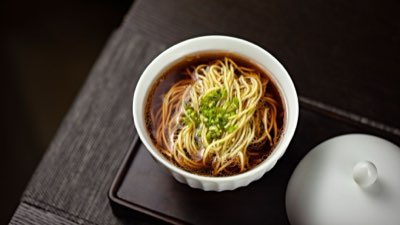
The steam rises from a ceramic bowl in a crowded Taipei night market, carrying the scent of star anise and beef. You realize that the words used to describe the broth are as much a part of the meal as the noodles themselves.
The connection between language and food is inseparable in Taiwan, where linguistic identity often mirrors culinary tradition. Taiwanese Hokkien, also known as Tâi-gí, is the most spoken native language in Taiwan, spoken by roughly 70% of the population.
This linguistic heritage shapes how flavors are categorized and passed down through generations. In many households, the specific terminology for "chewy," "springy," or "silky" noodles is tied to the local dialect, creating a cultural shorthand that defines what a "good" noodle should be.
When you walk into a shop in the Ximending district, you aren't just looking at ingredients; you are looking at a history of communication. The way a vendor describes a spicy broth using local idioms tells you more about the expected heat level than a generic spice rating ever could.
This cultural shorthand is vital for anyone trying to navigate the authentic flavors of East Asia.
How has the diaspora shaped global noodle trends?
A traveler sits in a small shop in San Francisco, staring at a bowl of beef noodle soup that looks remarkably like the one they had in Taipei. The flavors are familiar, yet they have been subtly adapted to a new environment.
The movement of people across borders has fundamentally changed how the world experiences wheat and rice noodles. The Chinese diaspora has acted as a global bridge, carrying specific regional techniques to every corner of the globe.
This movement has led to a massive expansion of noodle varieties, from the thick, hand-pulled styles of the north to the delicate rice noodles of the south.
According to demographic data, the diaspora has played a significant role in urban culinary landscapes, with some regions seeing a significant portion of their population belonging to these heritage groups.
For example, in certain metropolitan areas, the diaspora accounts for roughly 12% of the population, influencing local tastes and bringing specialized ingredients to mainstream supermarkets.
This demographic weight ensures that traditional techniques, like the precise aging of dough or the specific fermentation of soy sauce, remain vibrant even far from their original homes.
| Feature | Traditional Taiwanese Style | Diaspora-Adapted Style | | :--- much | :----------------------- | :---------------------- | | Primary Flour | High-protein wheat | Often mixed with local flours | | Broth Base | Deeply fermented/Aged | Often lighter or more acidic | | Noodle Texture | Firm and elastic | Can be softer to suit local palates | | Spice Profile | Complex, herbal (Star Anise) | Often bolder or much spicier |
What defines the soul of a noodle bowl?
The chef carefully folds a single strand of noodle, checking its resistance against the wooden chopsticks. This repetitive, rhythmic motion has been practiced for centuries, serving as a silent test of quality.
The "soul" of a noodle dish is found in the balance between the texture of the noodle and the depth of the broth. In Taiwanese cuisine, this balance is often achieved through the use of complex aromatics like Sichuan peppercorns, star anise, and goji berries.
The noodles themselves are often designed to carry the soup, meaning the thickness and surface area are calculated to maximize flavor absorption.
- Identify the base: Determine if the noodle is wheat, rice, or buckwheat-based. 2. Analyze the aromatics: Look for notes of ginger, garlic, or fermented bean paste. 3. Test the elasticity: A quality noodle should have a "bite" or "snap" when chewed. 4. Evaluate the broth-to-noodle ratio: The soup should complement, not drown, the texture.
I remember visiting a small noodle stall near the Taipei Main Station during a heavy rainstorm. The vendor handed me a bowl of Lu Rou Fan-inspired noodles, and the sheer intensity of the braised pork aroma was a sensory overload that felt like a warm hug.

How do we distinguish authentic flavors from imitations?
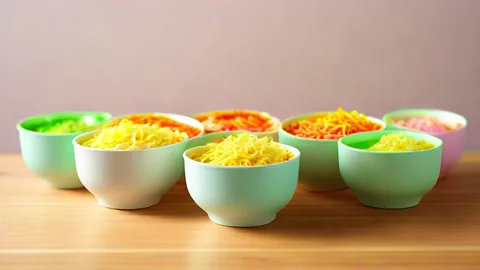
A bright neon sign flickers above a grocery store shelf, casting a glow over rows of colorful, packaged noodles. You pick up a bag, wondering if the label's promises match the reality of the taste.
Distinguishing between authentic regional styles and modern imitations requires an understanding of traditional flavor profiles. For instance, authentic Taiwanese beef noodle soup (Niú ròu miàn) relies on a specific balance of savory umami and subtle herbal notes.
Many commercial versions simplify this by over-relying on salt or excessive chili oil, which masks the complexity of the broth.
Authenticity is often found in the "aftertaste" or the lingering notes of a dish. A well-made broth will leave a clean, savory finish, whereas an imitation might leave a heavy, greasy coating on the tongue.
When shopping for premium noodles, look for brands that emphasize traditional fermentation processes or specific regional wheat varieties.
Is there a limit to noodle innovation?
A young chef experiments with a modern molecular gastronomy kit, turning a classic broth into a clear, gelatinous sphere. The traditionalists in the room watch with a mix of curiosity and skepticism.
While innovation is necessary for the survival of any culinary tradition, there is a delicate balance to maintain. If a noodle becomes too much of a "concept" and loses its structural integrity or flavor balance, it ceases to be a functional meal.
The trade-off of modern innovation is often the loss of the subtle, layered flavors that define historical recipes.
It is important to note that these cultural insights do not apply to fusion cuisines that intentionally depart from tradition. In those cases, the rules of "authenticity" are replaced by the rules of creative expression.
However, for the purist, the goal is always to honor the original intent of the dish.
When I tried the steps in order, the second one is where I paused longest.
Related


Comments 0